

FAQ
Hereunder we provide answers to frequently asked questions, in three categories: Technology, Service and General
If your question is not answered, please do not hesitate to contact us. We are happy to help!
Technology
Batteries with LiFePO4 technology have cells with a lithium iron phosphate substance. As a result, they do not have any environmentally polluting raw materials. LiFePO4 technology is - compared to LithiumIon - chemically more stable and non-combustible. In addition, the LiFePO4 batteries have a longer life and a low discharge rate. LiFe(PO4) batteries are therefore more environmentally friendly but, above all, safer than Li-Ion batteries.
Traction batteries are cheap but very heavy. In addition, they contain lead and acid, both of which are very harmful to the environment. Traction batteries can be discharged much less deeply than LiFePO4 batteries and therefore provide less usable energy. Finally, traction batteries must always be fully charged; just an hour on the charger during a stop is therefore not included.
Our LiFeEPO4 batteries last at least 4,000 full cycles. One cycle is one full charge of a completely empty battery; per boat trip, the average loading cycle is 0.7, bringing the number of trips (4,000/0.7) to more than 5,700!
One Kw is equal to 1.36 HP
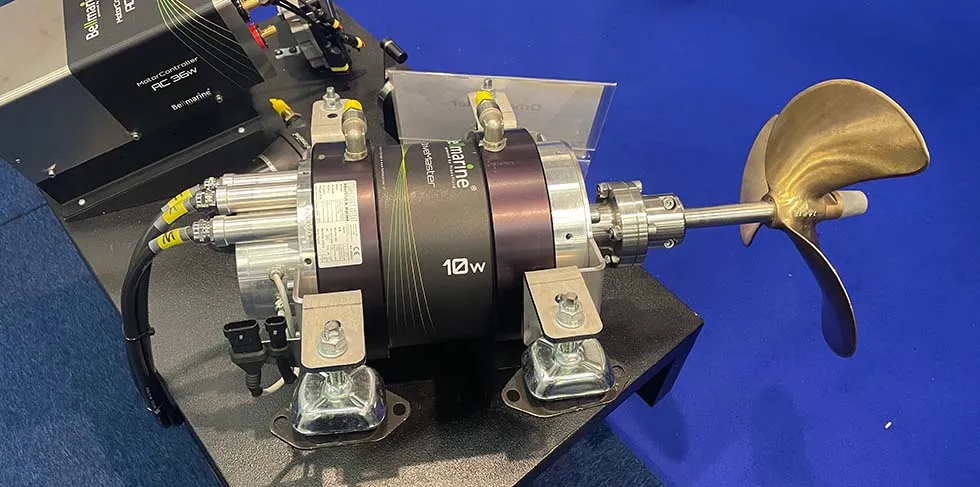
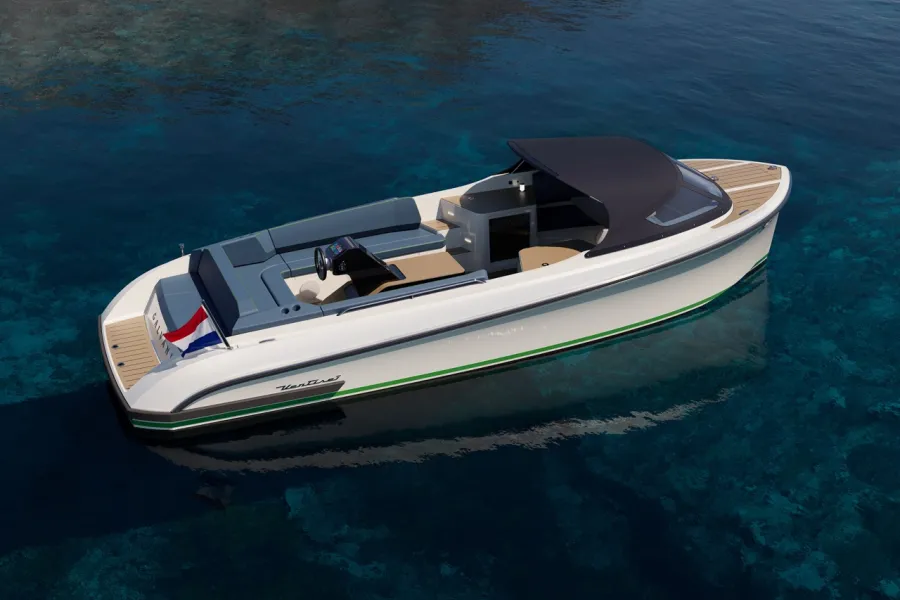
Often (diesel) engines are chosen (too) large because they then run quieter (less noise and vibrations). This is not the case with an electric motor and the power is tuned to what is actually needed. The 10Kw motor in the Ventisei-e has 40% overcapacity and is never overloaded.
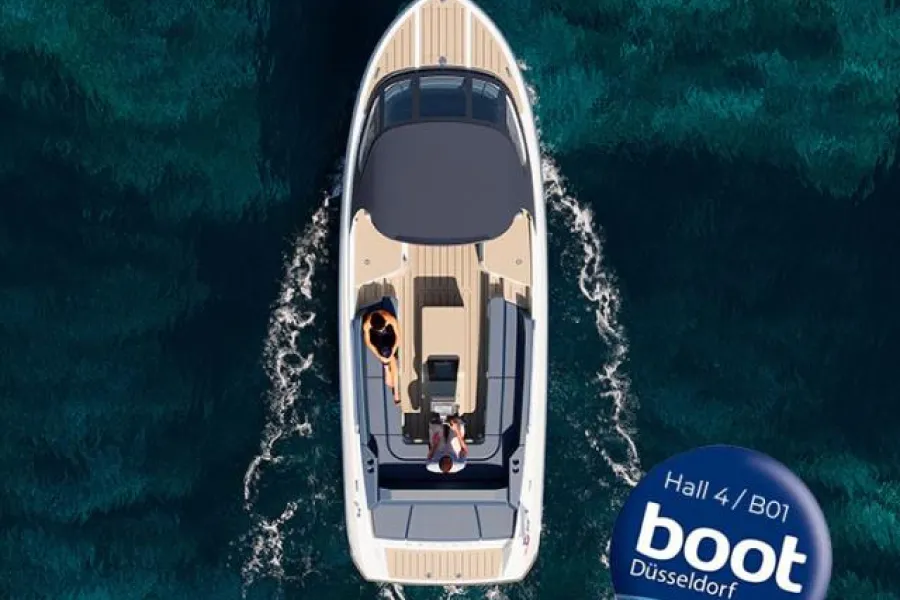
The e-HS is a fast-moving boat and must be brought and held by speed in plan (then the boat is partly lifted out of the water and slides over it). This requires a lot of power.
Often in purchase. This is mainly caused by the high costs of the LiFePO4 batteries. In use, an electric boat is much cheaper. Not only because the electricity price is relatively much lower than that of petrol or diesel, but especially because an electric motor hardly needs any maintenance and lasts a very long time.
Hydrogen is not or hardly available in ports. Current it is. If there were to be a switch from batteries to a fuel cell in the future, this could be linked to the electric motor. A fuel cell is a kind of generator that can generate electricity with hydrogen.
To any normal socket or shore power connection of 6, 10 or 16 amps. The HS models (288V) can also be charged with a fast charger (charging station).
After a day of sailing, the batteries are recharged overnight. During a stop you can always plug the boat into the shore power to top up if you prefer. The HS models are charged for 80% in an hour with a fast charger.
Service
General
We are adding questions as we move along. Do you have a question? Then let us know!